A complete ebook on getting started as a night sky observer
Preface: An Author’s Note
I first met the night sky through a friend.
I was thirteen years old when a schoolmate, already deep into astronomy, decided to upgrade his telescope. He was building a six-inch reflector and offered to sell me his three-inch reflector. I bought it without fully knowing what I was doing, only that something about the stars had already taken hold of me.
Not long after, I found a small Golden Book titled The Sky Observer’s Guide. It was simple, encouraging, and quietly confident that an ordinary person could learn the sky.
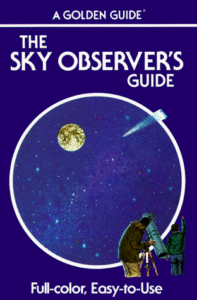
That little book shaped how I understood constellations, seasons, and the joy of patient looking. In many ways, it taught me how to be an observer, not just what to observe.
This guide carries a gentle debt to that book. Not in content, but in spirit.
What you are reading here is a modern take to those early lessons. It draws from many of the same core ideas—learning the sky step by step, returning night after night, and letting familiarity grow into wonder—while embracing tools that were unimaginable when I first looked through that three-inch reflector.
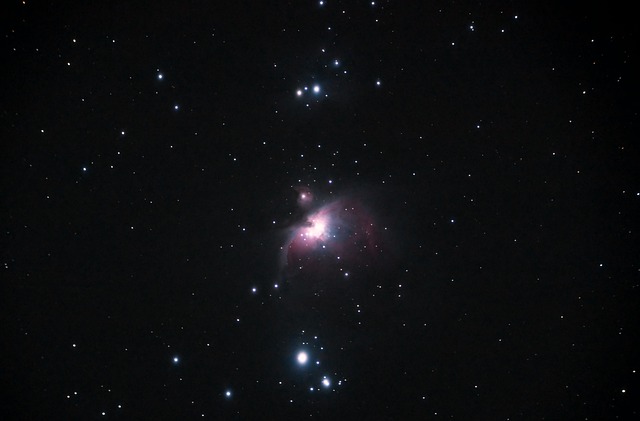
Today, as a mature adult, I find myself enjoying astronomy more than ever. I still feel the quiet thrill of recognition when a constellation rises. I still pause when a nebula slowly emerges from the darkness. And I marvel at the new technologies that now allow us to capture and contemplate the deep sky with unprecedented clarity.
This guide is written for beginners, but it is shaped by a lifetime of returning to the stars.
If it helps you feel at home beneath the night sky, then it has done what it was meant to do.
Becoming a Sky Observer
All of us, from childhood, have looked up into the night sky with a sense of wonder. Long before we understood what stars truly were, they already spoke to us. The wandering planets, familiar constellations, the delicate cluster of the Pleiades, and whispered names like the Orion Nebula or the Andromeda Galaxy hint at a universe both vast and personal.
As you engage with sky observing, the good news is this: you do not need to be a scientist, mathematician, or expert to explore the night sky. You can become an amateur astronomer, whether casually on warm summer evenings or more dedicated as a lifelong pursuit. As a believer in the God of the bible, I’ll offer a few scriptural reflections from time to time…
Faith Reflection
“Lift up your eyes on high, And see who has created these things, Who brings out their host by number; He calls them all by name, By the greatness of His might And the strength of His power; Not one is missing.” (Isaiah 40:26)
A Brief History of Looking Up
From ancient shepherds and sailors to modern backyard observers, the sky has always guided humanity. Early civilizations tracked celestial cycles to mark time and seasons. The Greeks formalized celestial models. Copernicus displaced Earth from the center. Galileo revealed a dynamic, cratered Moon and moons orbiting Jupiter.
Messier’s catalog, originally a comet-hunter’s aid, became a roadmap to deep-sky wonders. Hubble showed us that the universe extends far beyond the Milky Way.
Today, amateur astronomers stand at a unique point in history: equipped with ancient curiosity and modern tools.
Why Observe?
Astronomy enlarges and reshapes our perspective. It slows us down. It helps us better understand how large the cosmos is. It reconnects us with the rhythms of creation. Many find that it nurtures humility, gratitude, and quiet joy. Some use it as inspiration to better appreciate the omnipotence and artistry of God.
Choosing Your Equipment
Binoculars
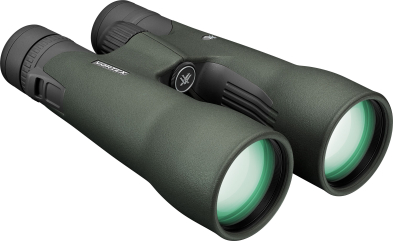
Comment: often the best first purchase. Binoculars are intuitive, forgiving, and much more powerful than the naked eye.
Expect: sweeping star fields and clusters. Andromeda Galaxy would be a swirly smudge of white.
Refractor Telescopes
Comment: Refractors use lenses to bend light to a focus. Their sealed tubes and precise optics produce high-contrast images with minimal maintenance.
Why choose a refractor?
- You value sharpness and simplicity
- You enjoy the Moon and planets
- You want minimal setup
Image strengths: lunar detail, planetary clarity, double stars, more detail in galaxies.
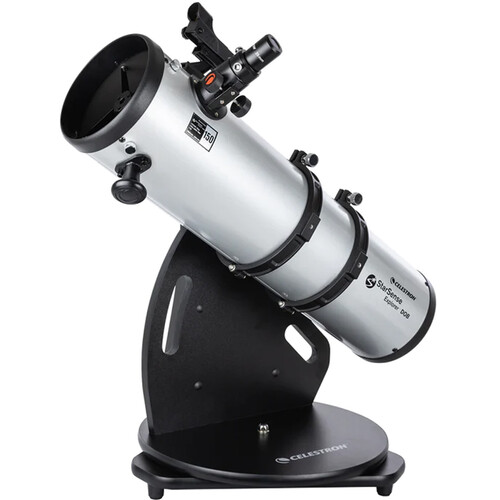
Reflector Telescopes
Comment: Reflectors use mirrors as their light-gathering objective. Large mirrors collect vast amounts of light, making faint objects visible. Keep in mind, images are upside down. Normal in astronomy. Read more about it here.
Why choose a reflector?
- You want deep-sky performance
- You want the most aperture for the price
Image strengths: nebulae, galaxies, clusters.
Smart Telescopes: A Quiet Revolution
If you’re totally new to astronomy, a smart telescope is an exciting new option for you. It uses a phone app to automatically find and follow objects in the sky. You can be a total novice — just aim it roughly at the sky, pick what you want to see from the app, and it points itself at the object and takes a series of quick photos, stacks them together to make one clear image, and shows you the result on your screen. No fiddling required! Both the Dwarf Mini (from DwarfLab) and the Seestar S30 Pro (from ZWO) are super portable smart scopes designed for beginners who want easy stargazing yet with great results.
Smart telescopes are an all in one solution worthy of consideration.
Mini Reviews
| Model | Strengths | Ideal For |
|---|---|---|
| DWARF Mini (c $400) | Portability, simplicity. Has IMX662 (1/2.8″ sensor). Alt-Az + Equatorial (EQ) mode tracking. | Beginners, budget conscious. |
| Seestar S30 Pro (c $600) | Imaging power! Has IMX585 (1/1.2″, light-sensitive area 4× more pixels than Dwarf Mini). Alt-Az + Equatorial (EQ) mode tracking. | Middle level enthusiasts who want better images. Deep-sky observing. |
| Vaonis Vespera 2 (c $1,900) | Design, refinement. Also has IMX585 sensor, but has a 50 mm lens vs 30 mm for the other two, so more light-gathering. Alt-Az tracking only (with de-rotation). | Committed enthusiasts, group viewing. |
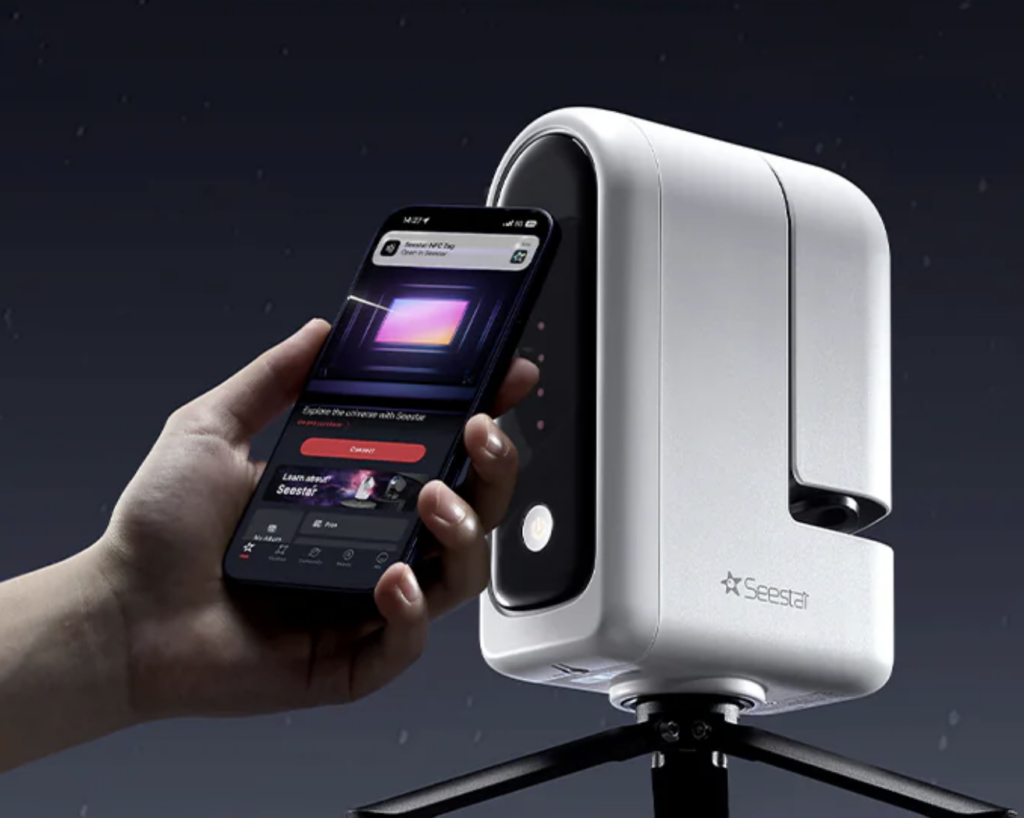
Smart Scope Tips:
Use smart scopes as teachers. Watch where objects appear in the sky. Note on tracking (moving the telescope so the stars don’t streak when photographing), EQ is a bit better in photographic results than Alt-Az because it aligns the moving stars better, but it’s also harder to set up.
Observing as Community
Astronomy is richer when shared. Star parties and small gatherings turn solitary wonder into communal experience. Whether you join an astronomy club (see section at end of book), or do Smart Telescope viewing parties, sky observing is definitely a community thing!
Smart Telescopes Can Facilitate Viewing Parties!
All three of the reviewed smart telescopes support simultaneous viewing by multiple people (not just the primary operator), allowing others to watch the live feed in real time via their own devices connected to the same scope.
- Dwarf Mini: Supports multi-device connection for live viewing/sharing (via the DWARFLAB app; up to several users can join for shared observation.
- Seestar S30 Pro: Guest Mode allows up to 8 devices to connect simultaneously. Everyone views the live feed in real time; the host controls, others observe.
- Vaonis Vespera 2: Supports up to 8 mobile devices connecting at once. The first device is the administrator (controls the scope), while others have viewing access to the live stream/feed.
In practice, this makes all three great for group sessions, outreach, or family/friends viewing together without needing separate scopes.
Faith Reflection
“One thing I ask from the Lord… that I may dwell in the house of the Lord all the days of my life, to gaze upon the beauty of the Lord.” (Psalm 27:4)
Further Reading & Trusted Resources
- Sky & Telescope – Equipment reviews and observing techniques
- Astronomy Magazine – Beginner gear guides
- BBC Sky at Night – History and modern observing
- Turn Left at Orion – Visual deep-sky roadmap
- NightWatch – Foundational beginner guide
Understanding the Sky
Before we can meaningfully explore the heavens, we need a mental framework for how the sky works. This chapter provides that framework. Think of it as learning the grammar of the night sky. Once you understand it, everything else begins to make sense.
Faith Reflection
“The heavens are telling the glory of God; and the firmament proclaims His handiwork.” (Psalm 19:1)
The Celestial Sphere: A Useful Illusion
Imagine the Earth suspended at the center of a vast hollow sphere, with all the stars attached to its inner surface. This is not physically true, but it is an extraordinarily helpful way to think about the sky.
As the Earth rotates, the celestial sphere appears to turn. Stars rise in the east, arc across the sky, and set in the west. Over the course of a year, the nighttime side of Earth faces different regions of this sphere, revealing new constellations with the seasons.
Diagram Description:
Picture yourself inside a transparent globe. The stars are fixed on the globe. As you slowly turn, different stars come into view.
Stars: Fixed Yet Ever-Changing
Stars appear fixed relative to one another, forming stable patterns over human lifetimes. This is why star charts work. Yet stars do change position slowly over thousands of years, and they are constantly moving through space.
Understanding this apparent stability helps explain why the sky feels dependable and navigable.
Constellations: Maps, Not Places
Constellations are regions of the sky, not just stick-figure drawings. Modern astronomy divides the sky into 88 official constellations, covering the entire celestial sphere.
Learning a handful of key constellations gives you anchor points. From these, you can locate countless objects.
Try this tonight:
Learn just one constellation well. Return to it on several nights.
Star Charts: Your First Astronomical Tool
A star chart is a map of the sky for a specific date, time, and location. Because the sky changes continuously, charts must be matched to the moment.
Rotating star charts (planispheres) are excellent learning tools. Apps perform the same function dynamically.
Common Beginner Mistake:
Using a chart for the wrong time or holding it upside down.
Magnitude: Understanding Brightness
Magnitude is a logarithmic scale describing brightness. Lower numbers indicate brighter objects. Each step represents a significant change in brightness.
- The Sun: −26
- Full Moon: −12
- Bright stars: 0 to 1
- Faint galaxies: 10 and higher
Diagram Description:
Imagine a staircase where each step downward doubles the light.
Motion in the Sky
The sky moves in three important ways:
- Daily motion from Earth’s rotation
- Seasonal motion from Earth’s orbit
- Planetary motion from planets wandering among the stars
Recognizing these motions transforms confusion into understanding.
Further Reading & Trusted Resources
- Sky & Telescope – Sky Motions Explained: Clear explanations of daily and seasonal motion
- Astronomy Magazine – Beginner Sky Maps: Practical chart-reading guides
- BBC Sky at Night – How the Sky Moves: Visual demonstrations
- Stellarium Tutorials: Interactive sky simulation
First Steps in Observing
Every astronomer remembers a first night under the stars. Not because everything went perfectly, but because something clicked. This chapter is about helping that moment happen sooner, with less frustration and more joy.
Faith Reflection
“Stand at the crossroads and look; ask for the ancient paths, ask where the good way is, and walk in it.” (Jeremiah 6:16)
Astronomy is learned by doing. The sky is the teacher.
Seeing Conditions: Learning to Read the Night
Two main factors shape what you see: transparency and steadiness.
- Transparency describes how clear the air is. Haze, humidity, smoke, and light pollution reduce transparency.
- Steadiness (often called seeing) describes how calm the atmosphere is. Turbulence blurs fine detail, especially on planets.
A perfectly clear sky can still produce poor views if the air is unstable. Conversely, a slightly hazy night can deliver stunning planetary detail if the air is calm.
Try this tonight:
Watch how stars twinkle. Strong twinkling often signals poor steadiness.
Your First Night Under the Stars
Your first observing session should be simple.
- Choose one or two objects only
- Avoid rushing
- Allow your eyes 15–20 minutes to adapt to darkness
Success is not measured by how many objects you see, but by how deeply you notice.
Common Beginner Mistake:
Trying to see everything at once.
Using Your Equipment – Some Tips
Whether you’re using binoculars a small telescope or a smart telescope, the following are some specific guidelines and tips.
Binoculars
Begin wide. Let star fields drift slowly through view. Binocular astronomy feels more like exploration than inspection.
Best early targets:
- The Moon
- Pleiades
- Milky Way star clouds
- Andromeda Galaxy
Small Telescopes
Start at low magnification. Higher power narrows the field and magnifies atmospheric disturbance.
Best early targets:
- Moon craters
- Jupiter and its moons
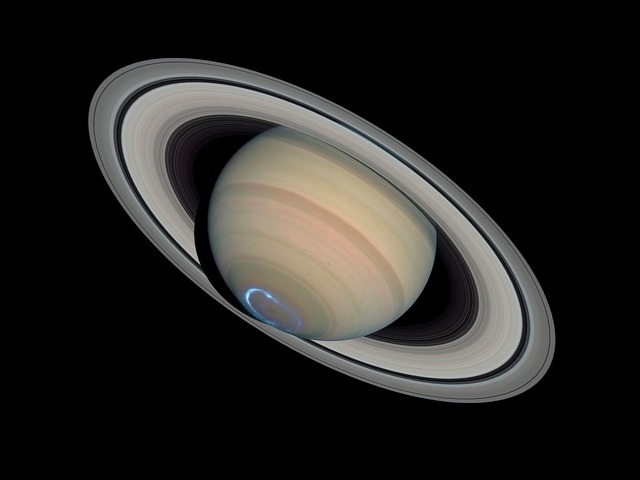
- Saturn’s rings
Smart Telescopes: Your Digital Companion
Smart telescopes reduce technical barriers to your fun. They simply work without the steep learning curve of other astrophotography options. And they produce fantastic photos.
What Alignment Really Means
Alignment teaches the telescope where it is and how the sky moves. Let the process complete fully.
What Stacking Actually Does
Stacking combines multiple short exposures, reducing noise and revealing faint detail over time. This is why images improve gradually. Note, this is a part of astrophotography that still has very clunky solutions. Tread here at your own peril. If you’re serious about maybe trying astrophotography, then start with a Smart Telescope, as described above.
Smart Scope Tip:
Watch the image build. The emerging image is part of the experience.
Finding Objects: Star Hopping vs Automation
Star Hopping (Manual Scopes)
Star hopping is navigating from bright stars to fainter targets using recognizable patterns.
Walkthrough Example:
- Locate Orion’s Belt
- Drop downward to the Orion Nebula
This skill builds confidence and sky familiarity.
Automated Finding (Smart Scopes)
Automation frees you to focus on observing, but learning object locations deepens appreciation.
Astronomy Apps: Learning the Sky in Your Pocket
These apps act as living star charts.
Sky Guide
A beautifully designed app ideal for beginners. It emphasizes orientation and visual clarity.
SkySafari
A powerful tool with deep databases, telescope control, and advanced planning features.
Stellarium
Highly accurate and educational. Excellent for learning sky motion and seasonal changes.
Smart Scope Tip:
Preview objects in apps before observing to set expectations.
Your First Month of Observing
After several sessions, patterns emerge.
- Constellations become familiar
- Setup becomes faster
- Expectations become realistic
This is where astronomy becomes a habit rather than a novelty.
Your First Year Under the Stars
Over a year, you will:
- Watch constellations change
- Revisit favorite objects
- Notice improvement in your observing skills
Faith Reflection
“One generation commends your works to another; they tell of your mighty acts.” (Psalm 145:4)
The sky becomes a companion.
Further Reading & Trusted Resources
- Sky & Telescope – In-depth observing guides and beginner tutorials: https://skyandtelescope.org
- Astronomy Magazine – Monthly sky highlights and equipment reviews: https://astronomy.com
- BBC Sky at Night – Accessible visual astronomy and interviews: https://www.bbc.co.uk/programmes/b006mk7h
- Stellarium User Guide – Learning sky motion and planning sessions: https://stellarium.org
- Turn Left at Orion (Guy Consolmagno) – A classic visual observing guide
- NightWatch (Terence Dickinson) – A foundational beginner’s handbook
Stars, Constellations, Nebulae, and Galaxies
This chapter is where astronomy often stops being merely interesting and becomes deeply moving. Here we are no longer talking about maps or equipment, but about the actual inhabitants of the universe: stars blazing with energy, constellations that guide our eyes, nebulae where stars are born and die, and galaxies so vast they humble the imagination.
Faith Reflection
“He determines the number of the stars and calls them each by name.” (Psalm 147:4)
To observe the heavens is to glimpse both immensity and intimacy at the same time.
Stars: Suns Scattered Across Space
Stars are not pinpoints painted on a dome. They are enormous spheres of hot gas, generating light through nuclear fusion. Our Sun is a star, average in size, but essential to life. Every star you see in the night sky is another sun, many far larger and more powerful.
Stars differ in:
- Color_attach: blue stars are hotter, red stars cooler
- Brightness: influenced by size, temperature, and distance
- Lifespan: massive stars burn brightly but briefly; smaller stars endure for billions of years
Observing Stars
- With binoculars: star colors become noticeable, especially in bright stars like Betelgeuse or Rigel. Star clusters explode into richness.
- With small telescopes: double stars separate cleanly, revealing beautiful contrasts.
- With smart telescopes: subtle color differences and dense star fields become vivid, especially in clusters.
Try this tonight:
Look at a bright star naked-eye, then with binoculars. Notice how it changes from a point to a world of color and texture.
Constellations: Patterns That Teach the Sky
Constellations are human-made patterns, but they serve a powerful purpose. They help us organize the sky and tell stories across cultures and millennia. While the stars in a constellation appear close together, they are often separated by immense distances.
Some constellations are seasonal companions. Orion dominates winter skies. Scorpius curls across summer nights. The Big Dipper acts as a signpost, pointing to Polaris, the North Star.
Faith Reflection
“Can you bind the chains of the Pleiades or loosen the belt of Orion?” (Job 38:31)
Long before telescopes, these star patterns were already speaking.
Observing Constellations
- Naked eye: ideal for learning patterns and orientation
- Binoculars: reveal hidden clusters and star clouds within constellations
- Smart scopes: excellent for diving deeper into famous constellation objects
Common Beginner Mistake:
Trying to memorize the entire sky at once. Learn one constellation per season.
Nebulae: Cradles and Graves of Stars
Nebulae are vast clouds of gas and dust. Some are stellar nurseries, glowing as new stars ignite. Others are the remnants of dying stars, shells of material cast into space.
Types of Nebulae
Emission nebulae glow as energized gas emits light. The Orion Nebula is the classic example.
Reflection nebulae shine by reflecting nearby starlight, often appearing blue.
Planetary nebulae are the delicate remains of sun-like stars shedding their outer layers.
Faith Reflection
“Lift up your eyes and look to the heavens: Who created all these?” (Isaiah 40:26)
Observing Nebulae
- Binoculars: under dark skies, bright nebulae appear as faint, ghostly glows
- Small telescopes: structure emerges, especially with filters
- Smart telescopes: real-time stacking unveils color, depth, and detail once impossible for amateurs
This is where modern technology feels miraculous. Watching a nebula slowly emerge on your screen is like witnessing creation unfold in real time.
Try this tonight:
Observe the Orion Nebula for several minutes. Notice how patience reveals more than haste.
Galaxies: Islands of Light in a Dark Sea
Galaxies are vast systems containing billions or even trillions of stars. Our Milky Way is just one among hundreds of billions of galaxies scattered through the universe.
Types of Galaxies
Spiral galaxies display graceful arms and ongoing star formation.
Elliptical galaxies are older, smoother, and often immense.
Irregular galaxies are chaotic, shaped by gravitational encounters.
When you observe a galaxy, you are seeing ancient light that began its journey millions or even billions of years ago.
Observing Galaxies
- Binoculars: Andromeda appears as a soft, elongated glow under dark skies
- Small telescopes: galaxy cores brighten, shapes emerge
- Smart telescopes: spiral arms, dust lanes, and companions become visible
Faith Reflection
“The Lord is great, and greatly to be praised; His greatness is unsearchable.” (Psalm 145:3)
Smart Scope Tip:
Galaxies reward longer observing sessions. Let the image build. Let the moment settle.
A Seasonal First-Object Guide
- Winter: Orion Nebula, Pleiades, Andromeda Galaxy
- Spring: Virgo galaxy cluster
- Summer: Lagoon and Trifid Nebulae, Milky Way star clouds
- Autumn: Andromeda Galaxy, Double Cluster
The Deeper Invitation
Every nebula, every galaxy, every star is an invitation. Not merely to learn, but to reflect. Astronomy reminds us that knowledge and wonder are not opposites. They grow together.
This chapter is not meant to be finished in one night. Return to it often. The sky will be different each time, and so will you.
Further Reading & Trusted Resources
- Sky & Telescope: Deep-sky observing guides
- Astronomy Magazine: Object spotlights
- BBC Sky at Night: Visual astronomy features
- Turn Left at Orion – Guy Consolmagno
- NightWatch – Terence Dickinson
Suggested Next Enhancements (Optional, Strategic)
This guide is intentionally written to be complete as it stands, yet flexible enough to grow. The following enhancements are optional, but they offer natural ways to deepen the reader’s experience and extend the life of the guide.
Object Spotlights
Short, focused features on individual celestial objects can be placed throughout the guide or linked as standalone pages.
Each spotlight can include:
- What the object is
- Why it matters scientifically
- Why it inspires wonder
- How it appears through binoculars, small telescopes, and smart telescopes
Ideal early candidates include:
- The Orion Nebula
- The Pleiades
- The Andromeda Galaxy
- The Lagoon Nebula
These spotlights help beginners form lasting relationships with specific objects rather than treating the sky as a checklist.
A Seasonal Observing Index
A simple seasonal index allows readers to return to the guide again and again throughout the year.
Examples:
- Winter: Orion, Pleiades, bright nebulae
- Spring: Galaxy season in Virgo and Coma Berenices
- Summer: Milky Way star clouds, emission nebulae
- Autumn: Andromeda Galaxy, Double Cluster
This index works especially well for a web-based guide and can later expand into full seasonal chapters.
Conclusion: An Invitation to Wonder
There comes a moment in every sky observer’s journey when looking up is no longer a novelty, but a habit, and no longer a habit, but something closer to a calling.
This guide has shown you how to observe the night sky. But now the question gently shifts: why continue? And perhaps more importantly: where does this path lead?
Across thousands of years, human beings have stood beneath the same stars you see tonight. Shepherds, sailors, scholars, monks, farmers, children, and scientists all traced patterns in the darkness, wondered at the lights above them, and sensed that the sky was saying something larger than words.
Faith Reflection
“He determines the number of the stars and calls them each by name.” (Psalm 147:4)
To observe the sky is to enter into this long human story. It invites humility, because the universe is vast beyond comprehension. And yet it also offers belonging, because you are seeing what countless others have seen before you, under the same stars, moved by the same quiet awe.
Growing as a Sky Observer
Growth in astronomy rarely happens all at once. It unfolds naturally.
At first, you learn to recognize a few constellations. Then a season passes, and you notice how the sky changes. You begin to anticipate what will rise later in the night, or what will return next winter. Objects that once felt abstract become familiar companions.
Knowledge deepens enjoyment. Understanding what you are seeing does not strip away mystery. It reveals layers beneath it.
Try This
Keep a simple observing journal. Write down not only what you saw, but how it made you feel. Over time, these entries become a quiet record of growth.
Paths Forward: Two Natural Forks
As your curiosity grows, many observers find themselves standing at a gentle crossroads. Neither path is better. Both are deeply rewarding.
1. Advancing with Smart Telescopes
Modern smart telescopes represent one of the most remarkable technological shifts in amateur astronomy.
Upgrading to more advanced smart scopes offers:
- Greater light-gathering power
- Improved sensors and noise reduction
- Longer exposure stacking
- Better control over image processing
These tools allow observers to explore faint nebulae and distant galaxies from light-polluted environments, often revealing detail that was once accessible only to experienced astrophotographers.
Smart telescopes are especially well-suited for:
- Urban and suburban observers
- Casual but curious learners
- Sharing the sky through live views and observing parties
They lower the technical barrier while preserving the sense of discovery.
Smart Scope Tip
As you upgrade, spend time learning why the image improves. Understanding stacking, exposure time, and sensor sensitivity deepens appreciation for the technology.
2. The Traditional Astrophotography Route
Others feel drawn toward a more hands-on, traditional approach.
This path often includes:
- A sturdy tripod and equatorial (EQ) mount
- A refractor or reflector telescope
- A DSLR or mirrorless camera
- Gradual mastery of polar alignment, tracking, and processing
This route demands patience, learning, and problem-solving. But it rewards perseverance with a deep understanding of both the sky and the tools used to study it.
Astrophotography teaches:
- Precision
- Persistence
- Respect for the sky’s rhythms
Many observers who choose this path find the learning itself becomes part of the joy.
The Gift of Community
Astronomy is often practiced alone, but it flourishes in community.
Joining a local astronomy club opens doors to:
- Shared observing nights
- Access to dark-sky sites
- Learning from experienced observers
- Trying equipment before purchasing
Notable Astronomy Clubs (U.S.)
- Los Angeles Astronomical Society (CA)
- Astronomical Society of the Pacific (CA)
- Texas Astronomical Society of Dallas (TX)
- Chicago Astronomical Society (IL)
- New York Amateur Astronomers Association (NY)
- Seattle Astronomical Society (WA)
- Orange County Astronomers (CA)
- Albuquerque Astronomical Society (NM)
- Central Florida Astronomical Society (FL)
- San Diego Astronomy Association (CA)
Notable Astronomy Clubs (Canada)
- Royal Astronomical Society of Canada (national, with local centres)
- Hamilton Amateur Astronomers (ON)
- Toronto Centre, RASC (ON)
- Vancouver Centre, RASC (BC)
- Montreal Centre, RASC (QC)
These communities remind us that wonder multiplies when it is shared.
Conclusion: “A Way of Looking”
In the end, astronomy is not only about objects and equipment. It is about learning to look.
To look patiently.
To look humbly.
To look with gratitude.
Faith Reflection
“Lift up your eyes and look to the heavens: Who created all these?” (Isaiah 40:26)
The sky does not demand expertise. It invites attention. And every time you step outside and look up, you answer that invitation anew.
May your curiosity deepen, your knowledge grow, and your sense of wonder never fade. The stars have been waiting a long time for you to notice them.
Clear skies, and may your nights be filled with awe.
PS
Image credits:
- Orion: Image by Kyoung-Sik Choi from Pixabay
- Binoculars by Bushnell
- Refractor and Reflector telescope examples by Celestron