
Andromeda Galaxy
| Name: | Andromeda Galaxy |
|---|---|
| Designation: | M31 |
| Magnitude: | 3.4 |
| Constellation: | Andromeda |
| Object Type: | Spiral Galaxy |
| Best Viewing: | Fall/Winter |
| Distance: | 2.5 million LY |
| Surface Brightness: | ~22.0 mag/arcmin² |
| Viewing Difficulty: | Very Easy |
| Viewable By: | Naked Eye / Binoculars |
| Zoom Image: | To Zoom |
| ESA Page: | To Page |
| ... Personal Entries: | |
| Observation Date: | |
| Location: | |
| Notes: | |
| ← Galaxies | |
| Next → |
back to Andromeda Galaxy image page
Psalm 19:1: The heavens proclaim the glory of God. The skies display his craftsmanship.
Summary Sketch:
- Closest spiral galaxy: Andromeda is the closest spiral galaxy to the Milky Way.
- Naked eye visibility: It can be viewed with the unaided eye on clear, dark nights.
- Very large: Andromeda galaxy is about twice the size of the Milky Way with roughly one trillion stars.
Diving In …
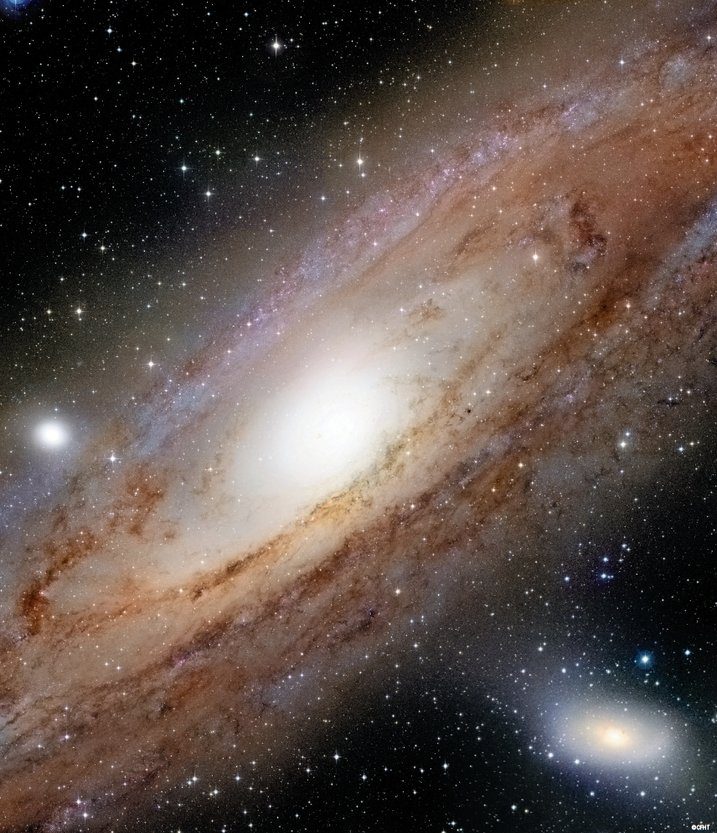
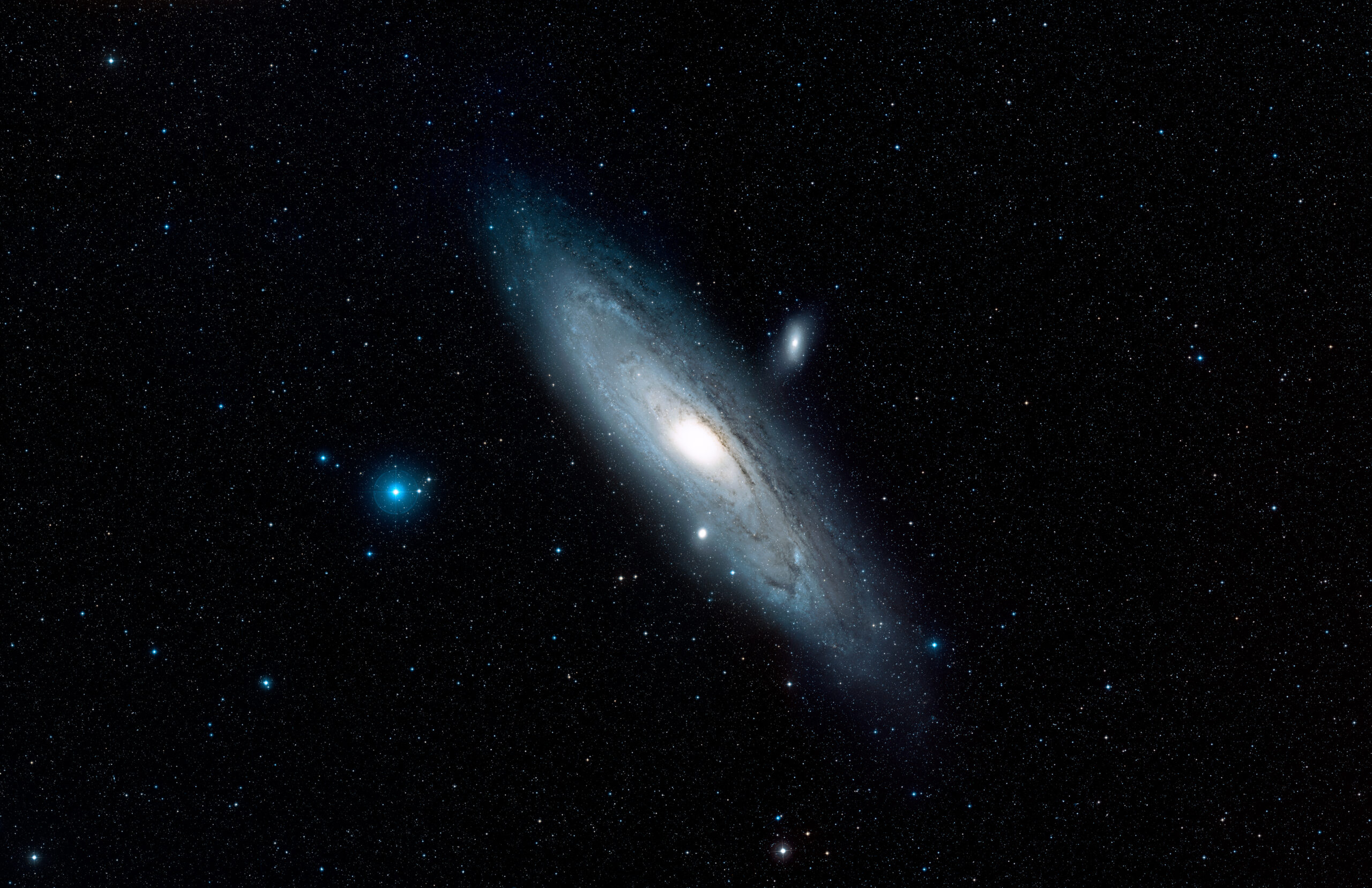
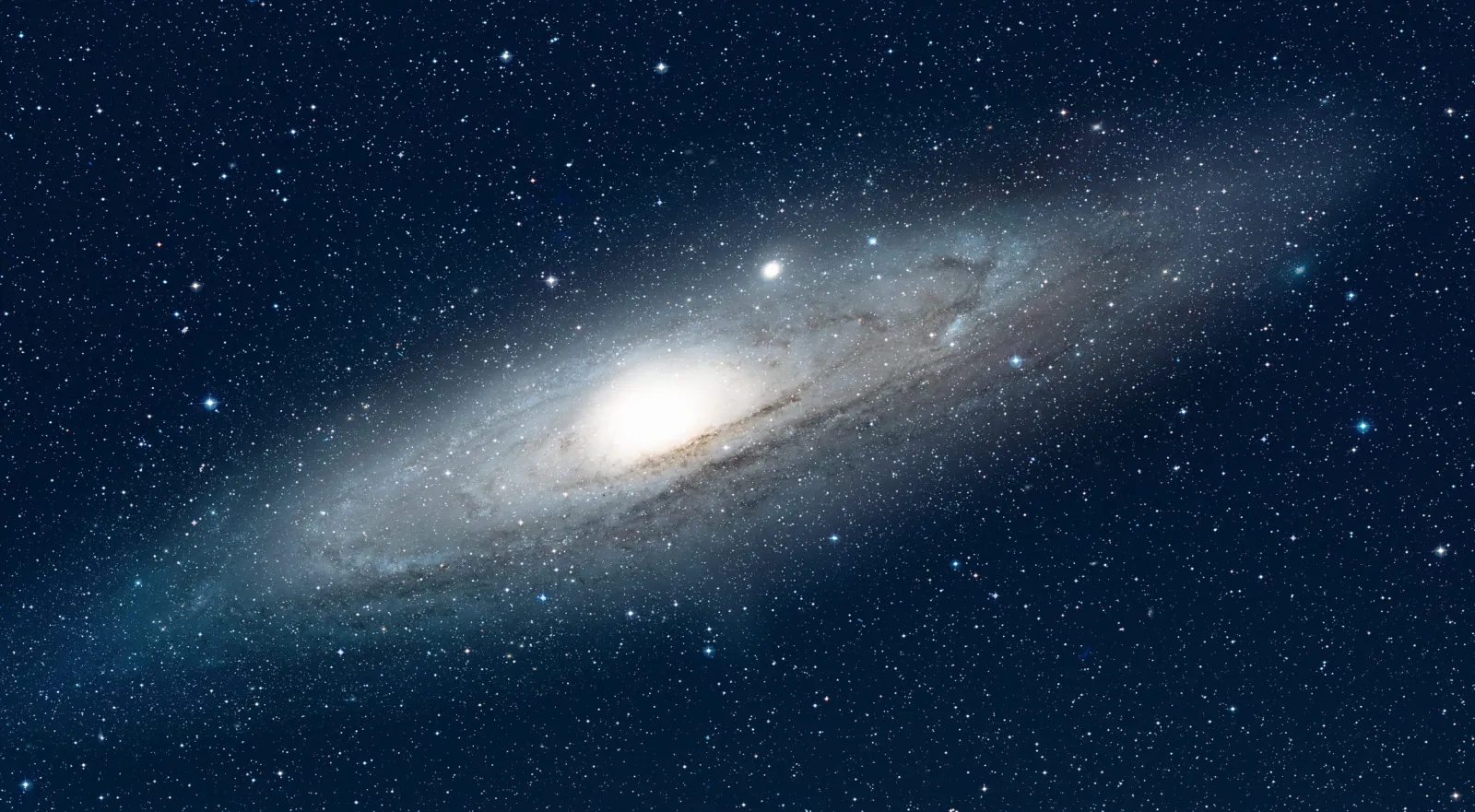
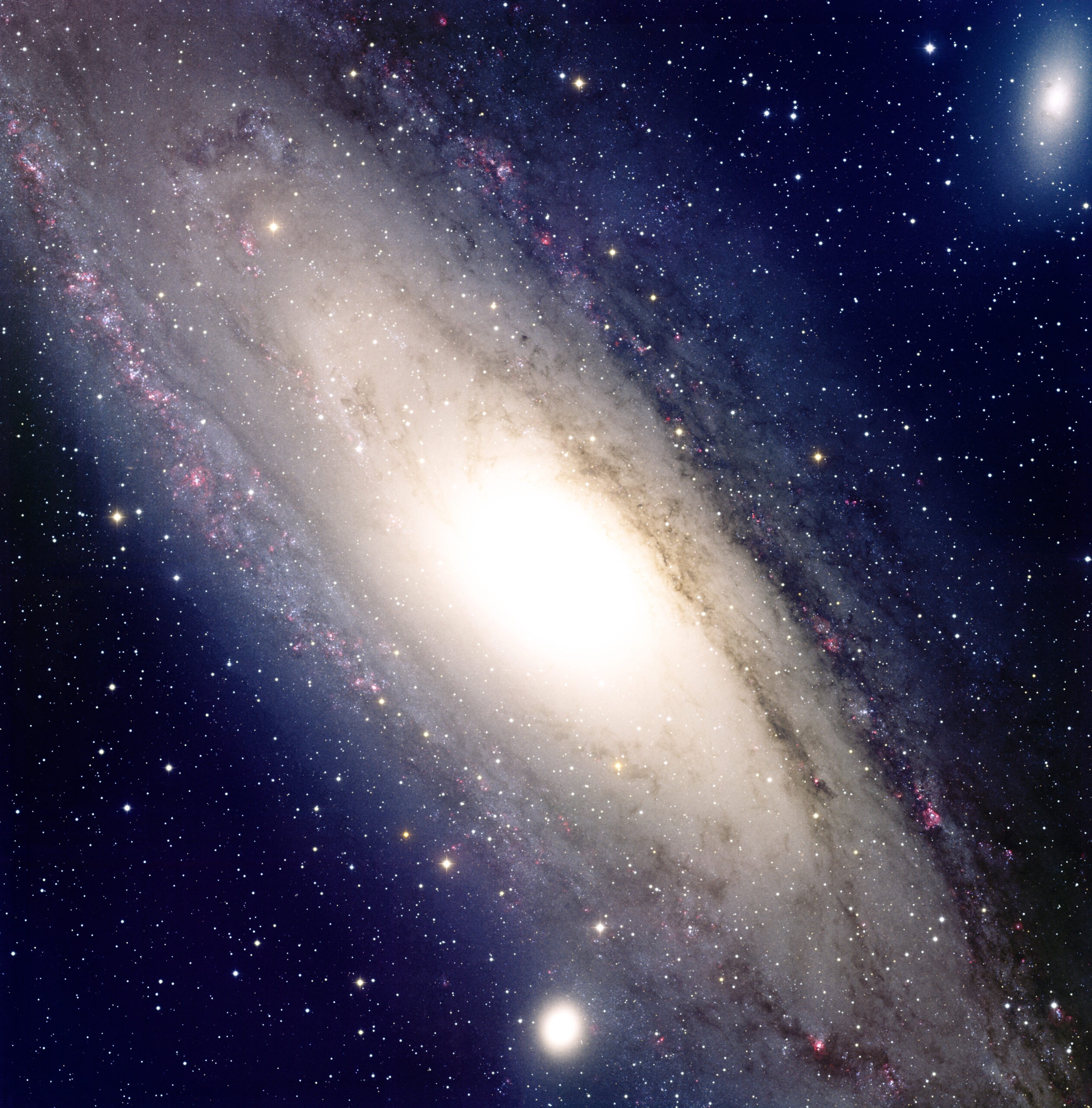
Andromeda Galaxy (M31) is part of “The Local Group.” This stunningly beautiful spiral galaxy is a resplendent display of God’s majestic creations in the night sky.

And there’s something strange about Andromeda Galaxy. 37 or more dwarf satellite galaxies orbit Andromeda. In recently published research, astronomers found that nearly all of these satellite galaxies are located between our two galaxies. In other words, they face us. Only a few of them are on the other side from us, and even they are close to the near side border. This info was published in Nature.com.
Another earlier anomaly was reported in 2006. Researchers Eva Grebel and Andrew Koch from the University of Basel in Switzerland using the the Hubble Space Telescope discovered that an unusually high number of Andromeda’s satellite galaxies are aligned along a single plane running through the center of the giant Andromeda galaxy. Think of floating dinner plates, but they are all at the same angle! Astronomers have no explanation and are baffled, with comments like, “it’s virtually impossible for this to occur.” Yet it does.
These non-random aspects of the Andromeda Galaxy and its satellite grouping may be indicators of Divine Design. The Universe is after all created by God, as is so iconically declared in Genesis 1:1.
God sits above the circle of the earth. The people below seem like grasshoppers to him! He spreads out the heavens like a curtain and makes his tent from them. – Isaiah 40:22
Image Gallery 1
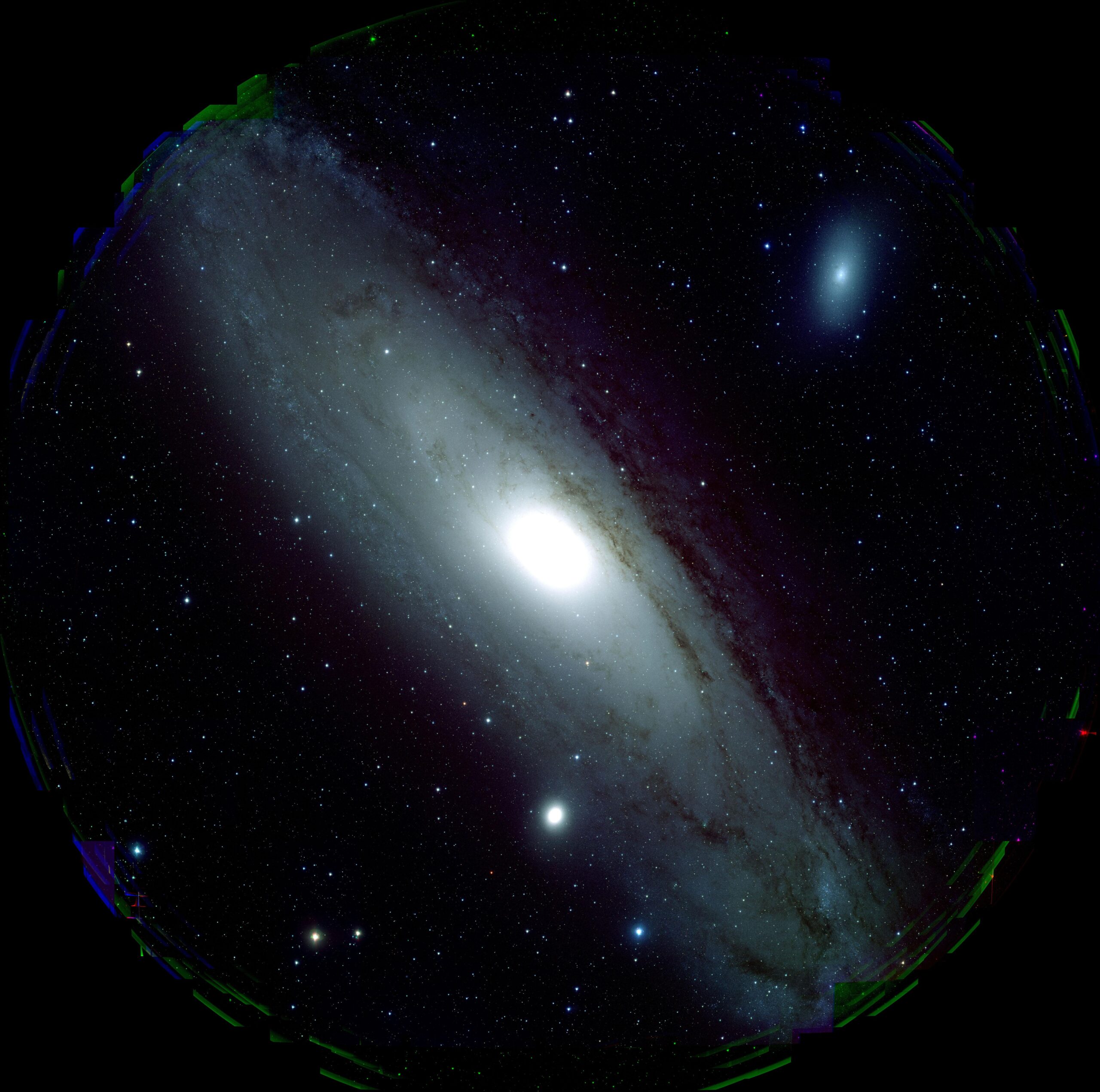
Andromeda Fly-in Video
Web Apps I Love:
- SkyMapOnline.net (web based customizable star chart)
- Sky & Telescope (another interactive web based star chart)
- Stellarium Web ( online planetarium based on the open source Stellarium Web Engine project; connected with the app “Stellarium Mobile.”
Mobile Apps I Love:
- SkySafari (the leader in mobile apps; includes optional membership in “LiveSky.com,” which syncs your observing data to other devices and to your web browser at www.livesky.com)
- Stellarium (multi-featured app that’s simply gorgeous; I love that objects look like a good photo of the real thing when you enlarge an area of the sky). They also have “Stellarium Web.”
- Sky Guide (another full-featured app, and very nice indeed; I love that their textual info on each object is not by Wikipedia. The content appears to be written by their own team at Fifth Star Labs.
- Sky Tonight (great app: I like that it has a “Trending” section with lots of magazine style articles and links, and “What’s in the sky tonight?” feature).
- The Sky Pro (a pretty cool German app. Lots of original content and nicely laid out).
Image Credits:
- Hubble and James Webb images Credit from NASA
- Kitt Peak National Observatory Credit: NOIRLab/NOAO/AURA/NSF
- Subaru Telescope images Credit: National Astronomical Observatory of Japan
- CFHT (Canada-France-Hawaii Telescope) Credit: CFHT/Coelum
Video Credits:
Andromeda Fly-in video: More information and download options: http://www.spacetelescope.org/videos/… Credit: NASA, ESA, Digitized Sky Survey 2, N. Risinger (Skysurvey.org), J. Dalcanton (University of Washington, USA), B. F. Williams (University of Washington, USA), L. C. Johnson (University of Washington, USA), the PHAT team, and R. Gendler.